A smarter way to deliver complex projects
Imagine setting out on a long road trip, only to discover halfway through that your GPS is broken and you’ve been navigating with the wrong map. Suddenly, you’re facing costly detours, frustrating delays, financial strain and uncertainty about reaching your final destination. Traditional infrastructure projects can feel the same way when unexpected roadblocks derail plans, drive up costs and push back delivery.
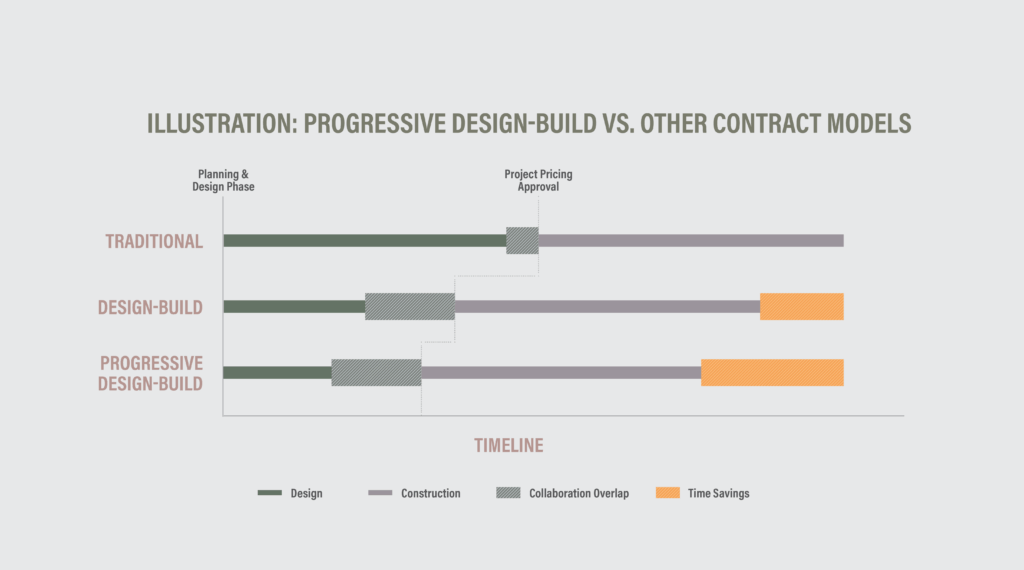
To avoid these pitfalls, many owners are turning to progressive design-build (PDB), a project delivery approach that integrates design and construction into a single, typically phased contract. Unlike traditional methods that separate these phases, progressive design-build emphasizes continuous teamwork and joint decision-making from start to finish, ensuring a smoother transition from planning to construction.
When properly executed, this early and sustained collaboration brings contractors, designers, owners and stakeholders together from the outset to align on goals and define a clear path forward. That collaboration often includes co-located teams, joint risk workshops, collaborative scheduling sessions and real-time design iteration. These efforts help validate project costs, address potential risks and adjust strategies long before shovels hit the dirt.
“You’re not waiting for something to go wrong,” said Matt Scott, Kiewit Corporation executive vice president. “You’re resolving issues when there’s still room to adjust. We believe this model works because it provides realistic, current costs for large, complex projects, helping owners understand funding needs or gaps to deliver their preferred design.”
Forecasting with confidence and certainty
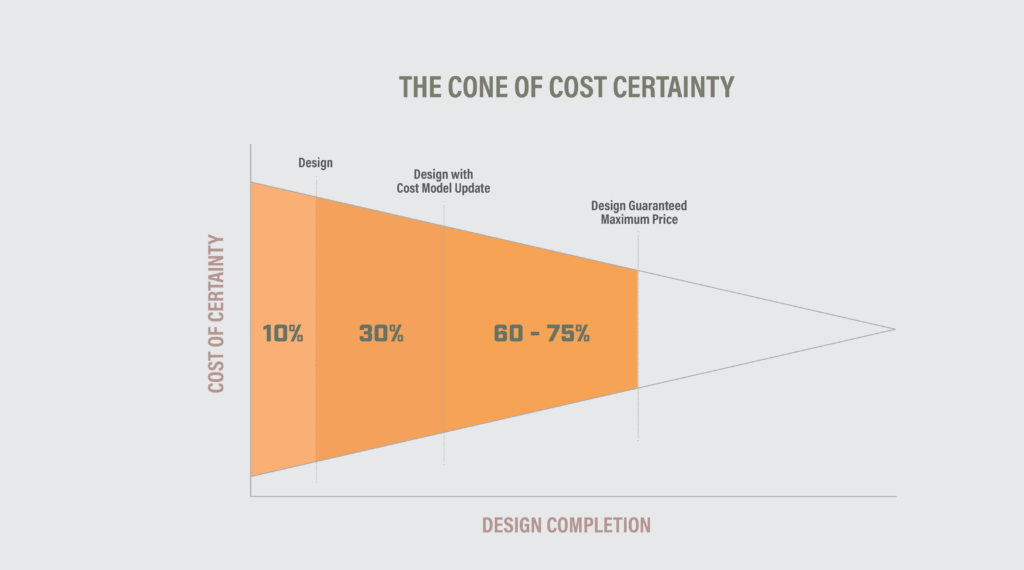
Picture a cone — wide at the top and narrowing toward the tip. That’s how progressive design-build manages uncertainty. At the start of a project, when only a small percentage of the design is complete, cost estimates fall within a broad range because there are so many unknowns. But as the design advances — from 10% to 30% to 60% — that cone narrows. Estimates become more accurate. Risks are identified and addressed. By the time the contractor proposes a construction price, it’s based on a shared understanding of scope, real-time data and a clear plan forward. This visual model, known as the Cone of Cost Certainty, helps owners make more confident funding decisions and sets up the project for long-term success. Rather than locking in a price too soon, PDB enables cost and design to evolve together through a transparent, structured process.
Smart start, smooth finish for emergency bridge repair
The Nolichucky Bridge Replacement in Tennessee demonstrates how progressive design-build delivers results through collaboration. The team replaced two aging bridges safely and efficiently, completing the project ahead of schedule thanks to early risk assessment and strategic planning. Open communication and joint decision-making made it possible to deliver a seamless execution that benefited everyone involved.
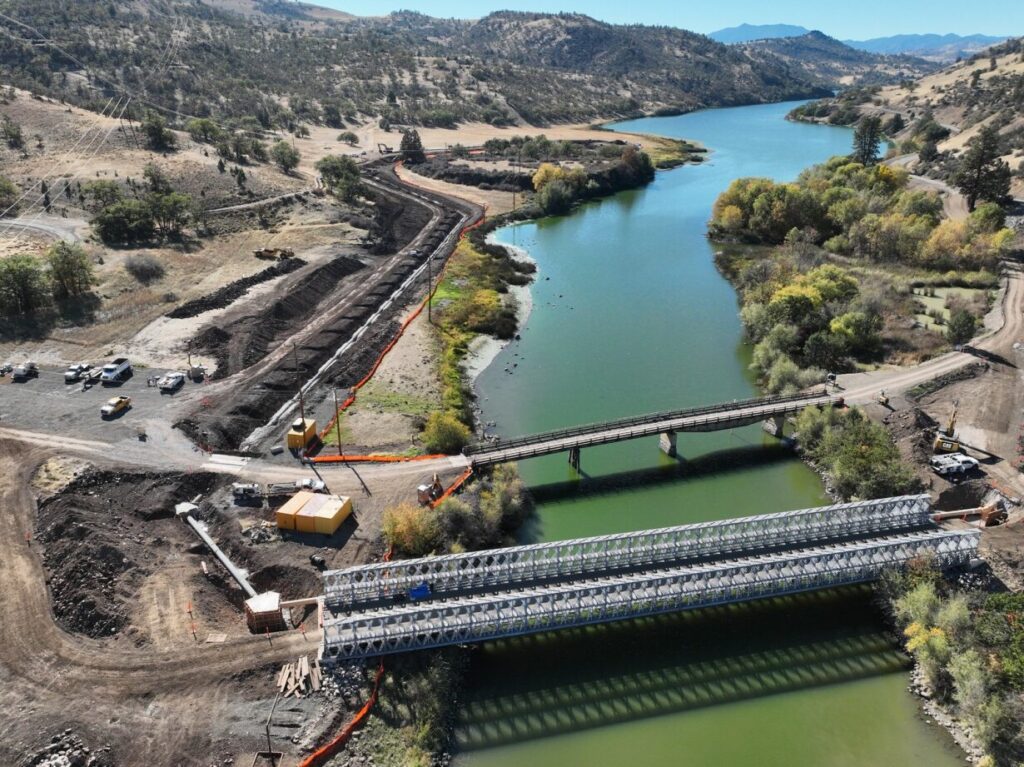
Nolichucky Bridge Replacement
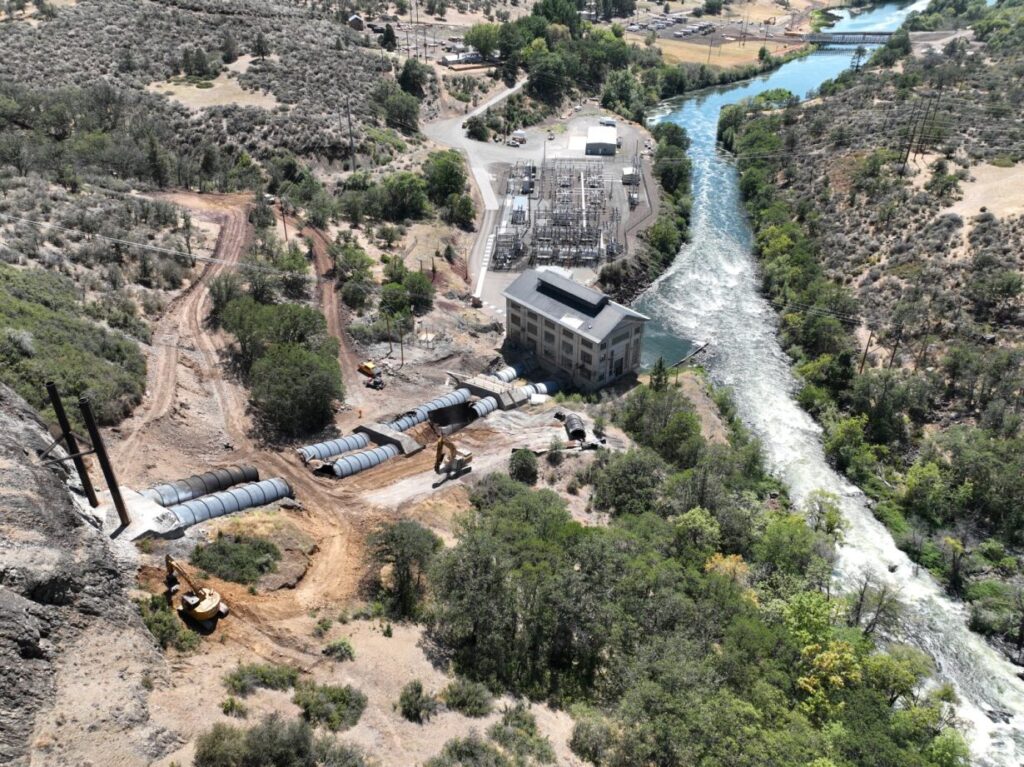
Klamath River Renewal Project
How PDB enabled historic dam removals
Another example is the groundbreaking Klamath River Renewal project — one of the largest dam removal efforts ever undertaken. Progressive design-build allowed Kiewit and its partners to tackle significant environmental, logistical and regulatory hurdles by engaging early in the design and permitting phases. The project’s proactive approach not only smoothed the path for removing four dams but also accelerated timelines, establishing new standards for complex environmental projects.
Adapting to change: BART Silicon Valley Phase II Extension
Flexibility is a key characteristic of progressive design-build. The Santa Clara Valley Transportation Authority (VTA) is leveraging this adaptability for its BART Silicon Valley Phase II Extension. Built-in decision checkpoints and off-ramp clauses give the agency room to reassess project elements without losing the substantial work already completed. These checkpoints aren’t indicators of trouble — they’re intelligent tools that allow public agencies to adjust to shifting circumstances, from funding changes to evolving project scopes.
The work that the Kiewit-led joint venture is performing for Stage 1 of its progressive design-build contract will set VTA up for future success. “The design development, geotechnical investigations, cost modeling and procurement strategies we executed for the project will provide long-term value for VTA, regardless of how the delivery proceeds,” Scott said. This allows the agency to make well-informed, timely decisions.
The bottom line: PDB drives better outcomes
The real strength of progressive design-build lies in its ability to deliver better outcomes through early alignment, shared accountability and strategic adaptability. By investing time and effort upfront, project teams minimize surprises, streamline decision-making and set the stage for successful completion. As infrastructure projects become increasingly complex and budgets face greater scrutiny, progressive design-build is poised to become not just a smarter way, but the preferred way, to deliver infrastructure. It’s a model built for today’s challenges and ready to meet tomorrow’s opportunities head-on.
Smart Sourcing Starts Sooner
Construction project costs and schedules are dependent on the availability of materials, engineered equipment and labor. Making sourcing strategy decisions earlier in the project is a distinct advantage of the progressive design-build contract model.
On progressive design-build projects, Kiewit’s procurement professionals join our engineering and construction counterparts at the table early for detailed and transparent conversations with our clients.
We start by identifying the key engineering deliverables that will have the biggest impact on procurement and overall project schedule and price. Think of long-lead items like engineered equipment — like process equipment technology or electrical equipment for a water treatment facility — or certain types of steel or pipe that are needed in large quantities or that are more difficult to procure.
We analyze many different data sources to better understand market availability and impacts on the project cost and schedule. Early engagement with subcontractors and suppliers to understand their current availability and pricing is crucial. Our Market Intelligence team — which includes employees who specialize in specific material categories such as reinforced concrete — complements what we gather from our conversations with subcontractors and suppliers with data from trusted external economic sources.
Kiewit draws on a robust database of self-perform history to better understand productivity rates. Procurement works closely with engineering and construction throughout this process to understand how different design choices will impact procurement and constructability. You can’t overstate how much we benefit from having both engineering, procurement and construction expertise in-house at Kiewit, on the same team, pursuing the same end goal — getting our clients the information they need to make informed decisions about their projects.
By providing clients with clear, data-driven scenarios early — illustrating the cost (capital and operational cost) and schedule impacts of decisions made at different stages of design completion — progressive design-build teams can have informed conversations from the outset and mitigate escalation risk.
Rather than being caught off guard by rising costs or delays, with progressive design-build, clients get timely updates and the opportunity to adjust strategies and find solutions that align with their budget and other important project criteria.